

By Angela M. Cranon, M.A
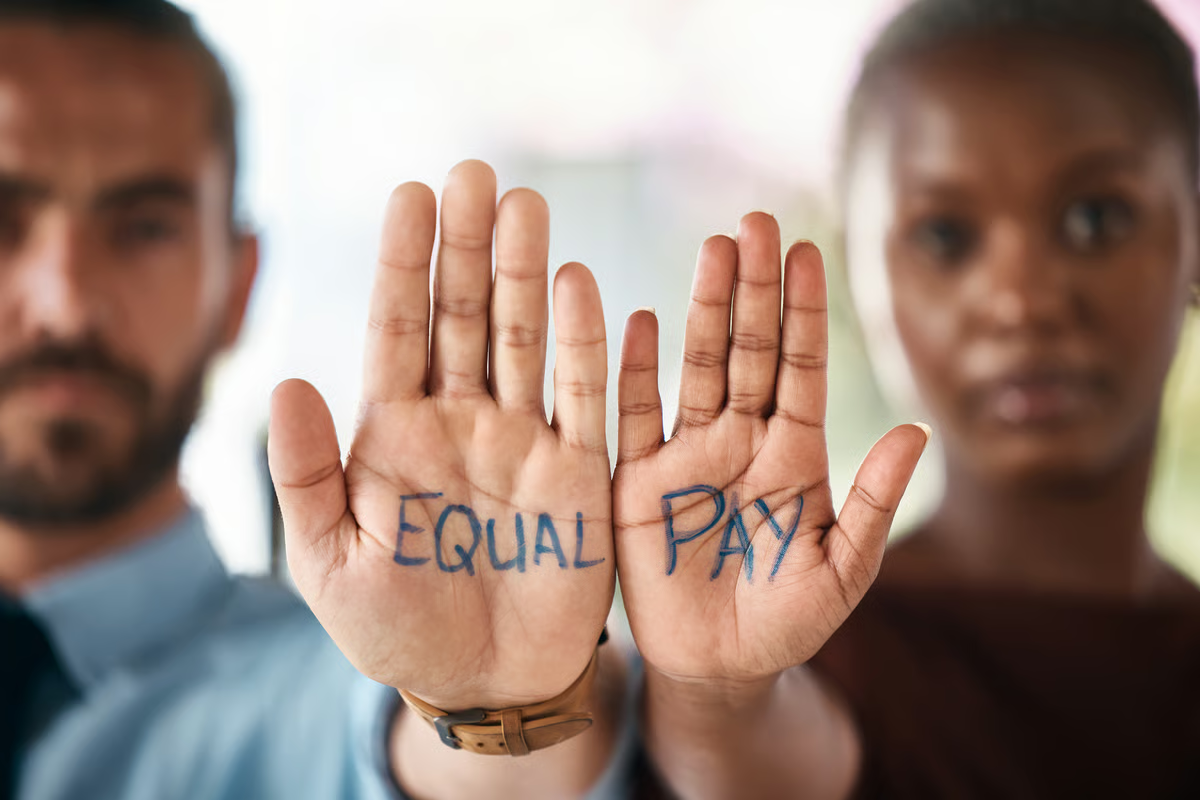
The gender pay gap still exists today, even though there are more women working than men outside of the home, not to mention, more women have gone back to college to earn higher education degrees compared to men over the past decade. But, that gender wage gap is narrowing, according to a Pew Research Center analysis. This is based on the median hourly earnings for both full-time and part-time employees.
According to the Census Bureau, 2015 showed a remarkable increase of women pay scales, where women working full-time, year-round, earned 80 percent of what men earned in that same year, a 20 percent gap in earnings for women. This means that if a man earned $50,000 a year, the woman for the same job earned $40,000. Interesting, however, working adults ages 25 to 34 in 2015 earned 90 cents for every dollar that a man earned in that same age group.
Also, in 2016 the gender pay gap shrunk even further, equalizing salaries a bit more, but not fully. However, one of the main reasons this gender pay gap still exists is largely due to the fact that women, more likely than men, take a career break or work part-time to raise a family. This reduces the on-the-job experience a woman would have competing against her male counterpart when seeking the same job. Even though a woman may have the same education and skills, the man would have the most experience. These career interruptions can last up to five years, until a child enters kindergarten.

However, women will more than likely continue to make less than men for the fact that there are more males who serve as presidents, vice presidents, executives, directors, and supervisors in the workforce. According to payscale.com, males dominate these upper job levels 85 percent over women by midcareer. This, of course, reduces the chance of a female making as much as a male, even with no career interruptions, and the gender pay gap widens as workers continue in their late-career years.
However, this gender wage gap is not designated to one type of job, but the pay gap affects all industries. Careers in finance and insurance have been identified as the largest industries to statistically show a gender pay gap. However, the wage gap decreases in careers in education, where women make about half-a-percent less than men for doing the same job. Meanwhile, there are recent trends that have made a turn to close the gender wage gap. For example, women make only seven percent less than men in what’s been considered to be historically male-dominated jobs for careers in Oil, Mining, Quarrying, and Oil and Gas Extraction industries. According to The New York Times, more women are choosing to work in these historically male-dominated jobs; as a result, this decreases the gender pay gap for median salaries. On the other hand, as males move into more traditionally female-dominated careers, the median salary for men increases—a reverse effect that still proves the point that gender pay gaps still exist.