
By Angela Crannon
Organ donation is a life-saving process, yet it remains one of the least discussed subjects among families and friends. However, organizations like OneLegacy work tirelessly to connect donors to transplant recipients, saving lives through the gift of organ and tissue donation. Headquartered in downtown Los Angeles, OneLegacy bridges the gap between organ and tissue donors and transplant recipients.
Its primary services include evaluating organ/tissue donor suitability, coordinating organ recovery and placement, tissue recovery, family support and aftercare, hospital staff education, and public outreach. As the largest nonprofit, federally designated organ procurement organization in the U.S., OneLegacy has been dedicated to saving and enhancing lives since its founding in 1977.
Serving a seven-county area, which includes Los Angeles, Kern, Orange, Riverside, San Bernardino, Santa Barbara, and Ventura counties, OneLegacy is committed to providing comfort and purpose to the families it serves. With approximately $43 million in revenue, it collaborates with 215 hospitals, 14 transplant centers, and a multicultural population of 18 million people.
OneLegacy was the first organization in the U.S. to exceed 400 donors in a single year. “We work with the hospitals to help them understand the donation process and facilitate it,” says Renee Hawthorne, Chief Operating Officer since 2001. “Donation is an opportunity for almost every family. The challenge is to represent it at the right time and in the right way.”
Hawthorne acknowledges the difficulty of the situation, especially as donation typically occurs after sudden death. “What we do is to make the opportunity available to donor families and to provide an environment conducive to them,” she explains. “I don’t want any family to walk away regretting their decision.”
There are many ways a donor can help save lives or improve the quality of life for others. Tissue donations, including corneas, heart valves, skin, bone, tendons, cartilage, and veins, are more widely used than organs because they can be stored for long periods. Skin tissue, for example, is vital for burn victims, especially soldiers returning from Iraq. Bone and tendon donations can help people with cancer or sports injuries.
Vital organs such as kidneys, livers, hearts, lungs, pancreases, and small intestines may also be donated. However, in most cases, only patients who experience brain death—defined as the irreversible cessation of all brain activity—are eligible to donate vital organs.
Cultural Sensitivity and Community Outreach
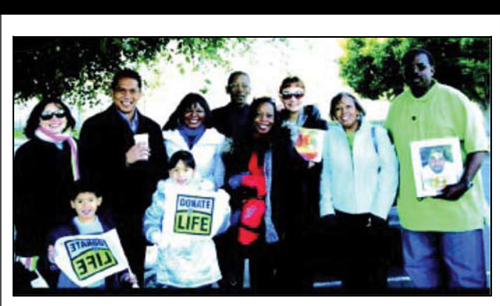
OneLegacy has specialists dedicated to serving the African-American, Hispanic, and Asian-American communities, where cultural beliefs and traditions may influence attitudes toward organ donation. According to OneLegacy, while African-Americans make up 12% of the U.S. population, they represent 27% of individuals on the National Organ Transplant Waiting List, and 35% of those awaiting a kidney transplant. More than 21,000 African-Americans are currently waiting for kidney transplants.
Ralph Sutton, OneLegacy’s African-American Community Development Coordinator, points out that organ donation isn’t a common topic in many African-American communities. “There is a lack of awareness, and many people don’t realize that organ donation can be done at no cost and it saves lives,” says Sutton. “Other health issues, like prostate cancer and hypertension, are more commonly addressed, but organ donation hasn’t been as prominently championed.”
OneLegacy’s Comprehensive Approach
Mily Teske, who has worked at OneLegacy since 1988, plays a key role in coordinating the donor process. She works with the Procurement Transplant Coordinator and regional directors to assess referrals, evaluate donor suitability, and follow up with donor families. “We review the patient’s chart to ensure they are qualified,” explains Teske. “We also intervene early with the family to help them understand the medical process and testing involved.”
Kari Kozuki, a licensed clinical social worker, focuses on supporting donor families after they have consented to donate. “We offer a two-year aftercare program that includes personal contact and a newsletter to help families with grief,” says Kozuki. “The pain tends to resurface at the six-month mark, which is why we continue to offer support during that time.”
A Humbling Experience
Both Hawthorne and Sutton find the work incredibly rewarding despite the emotional challenges. “Sometimes you cry with the family. It’s a difficult job, but knowing that you’re saving lives makes it worth it,” says Hawthorne. Sutton, who previously worked with the Sickle Cell Anemia Association, adds, “I had to ask myself if I could promote organ donation in the community. Once I understood the need, I felt it was my responsibility to encourage others to donate.”
Kozuki, too, finds her work inspiring. “Working with families who have so much strength and generosity has taught me not to take life for granted,” she says. “It makes me appreciate what I have every day.” Teske shares a personal story about her niece, who was placed on a heart transplant list at UCLA. “It gave me a new perspective on the importance of organ donation,” she says.
Comfort for Donor Families
For many donor families, the greatest comfort comes from knowing that their loved one has made a lasting impact. Kozuki recalls a mother who was grateful to have her son’s name displayed on a name tag at a memorial event. “It was a simple gesture, but it meant so much to her,” says Kozuki. “She said no one had said her son’s name in years because people were afraid it would make her cry. It’s important for these families to feel that their loved ones will never be forgotten.”
Real-Life Stories of Donors and Recipients
The Hernandez family’s story illustrates the profound impact of organ donation. In 2005, Erika Hernandez and her husband lost their eight-year-old son, Frankie, after he suffered a brain aneurysm. Despite their grief, they chose to donate Frankie’s organs. Frankie’s organs saved the lives of five children, including a young girl named Patti, who received Frankie’s intestines, and Juan, a young boy who received his heart. “It’s rewarding to know that Frankie’s spirit lives on through these kids,” says Erika. “Every time they visit, I know he’s still with us.”
Eunice Gibson, a nurse who received a double lung transplant in 2002, shares her gratitude for her donor. “I had a minimal existence before my transplant,” she recalls. “When I received the call that there were lungs for me, I felt a quiet certainty that I would be okay. I now cherish every day and take nothing for granted.” Gibson has kept in touch with her donor’s family, which has brought her a sense of closure and motivation.
The Need for Organ Donors
OneLegacy emphasizes that the need for organ donation is growing. More than 90,000 people are currently on the National Organ Transplant Waiting List, and that number continues to rise daily. “Organ donation is a powerful gift,” says Teske. “It’s incredibly difficult to say goodbye but knowing that your loved one’s organs are saving lives can bring peace.”
Kozuki adds, “The families we work with are incredibly grateful for the opportunity to give such a selfless gift, and that is truly humbling.”
If you are interested in becoming an organ or tissue donor, you can contact OneLegacy at (800) 786-4077 for more information.